What can we track?
Marketing efforts on social media can be more than content saturation and posting pandemonium. According to Avanish [1], social media metrics can be reduced to four aspects that provide practitioners insight into the effectiveness of their social media brand promotion campaigns. These metrics provide analytical insights that allow you to understand who your audience is and how to effectively engage them.
Marketing efforts on social media can be more than content saturation and posting pandemonium. According to Avanish [1], social media metrics can be reduced to four aspects that provide practitioners insight into the effectiveness of their social media brand promotion campaigns. These metrics provide analytical insights that allow you to understand who your audience is and how to effectively engage them.
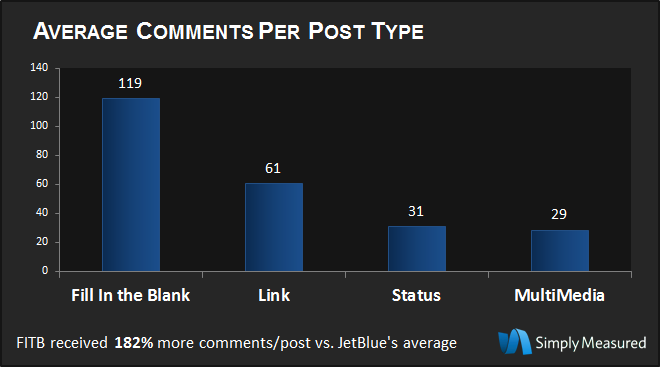
1. Conversion Rate: # of Comments Per Post
Where e-commerce conversions generally describe a completed sale, social conversions occur when subscribers to your social asset connect with you through comments or replies to the content that you have posted. Conversion rates are calculated by finding the amount of audience comments per posting. Achieving higher conversion rates can mean that content is engaging your audience and driving return visits and additional brand interaction. Beware posting content that artificially stimulates audience interaction and focus on obtaining genuine engagement with a message that is in line with your brand and organization.
2. Amplification Rate: # of Shares Per Post
Many channels of advertisement provide only a limited amount of impressions per add. Social media has the added benefit of enabling audience members in your own network to provide additional exposure to audience members within their own networks. Amplification rate describes the rate at which people take your original content and distribute it through their own social networks. Amplification actions may go by different terms based on the social site (re-tweet on twitter, share on YouTube Facebook and Google +), but each action amplifies the reach of the original posting. Analysis begins by categorizing content which obtained the highest amplification rates and finding similarities in order to influence future postings.

3. Applause Rate: # of Likes/+1 Per Post
All of today’s social media sites provide users a means to provide immediate feedback to content and comments from other user. Applause rate is the number of “kudos” (favorites, likes, +1s) per post. This metric allows marketers an insight into what content audience members like and dislike, while simultaneously notifying others in their social graph that they endorse your content. These endorsements follow your content and provide credibility to users who might have discovered it through search.

4. Economic Value: Value Per Visitor
Even though the previous metrics are an important way of quantifying how effectively your organization participates in social media, most high level managers need to be educated on the value that is derived from social efforts before allocating any additional resources. Social economic value is a combination of revenue generated and reduced costs that social media campaign’s produce. Before we are able to discover how social drives economic value, organizations need to define what their micro conversions are.
Micro Conversions
Micro conversions are web site engagement actions taken by users that are not overall conversion goals for the entire site. For example, when a user comes to your site to research what comments people are leaving for your products, but fails to make a purchase (a macro conversion goal), that individual has participated in a micro conversion. Organizations who define and track these micro conversions are able to gain insight on how aggregated micro conversions influence macro conversions. (2)
Micro conversions relate to social economic value in that once defined, our analytics tools are able to track how and quantify exactly how our micro conversions are influencing the money making conversions that mangers love. A micro conversions may look like any customer who looks at a support page, blog, or product info on our site. We then take that data and compare it to the amount of referrals from the social sites we participate in and the amount of macro conversions, we are able to prove that social participation can generate value to an organization.(3)

Take Away
Social media analytics can and must be used as a means of objectively measuring how effectively organizations are able to leverage social media to add economic value. However, social media’s most effective role in any organization is how it allows us to define our marketing message, while providing a communication tool that allows us to build relationships with our customers. Social marketers usually don’t work for free. By correlating social media efforts to profits, social efforts can be seen as a revenue generator.
Some Social Analytics Tools
These tools can help keep track of social media efforts through the gathering and reporting of every interaction that occurs on an organizations social media assets.
Hootsuite:
http://hootsuite.com/features/social-networks
Tool Demo
Google Social Reporting
http://www.google.com/analytics/features/social.html
Tool Demo
References:
1) http://www.kaushik.net/avinash/best-social-media-metrics-conversation-amplification-applause-economic-value/
2) http://www.kaushik.net/avinash/excellent-analytics-tip-13-measure-macro-and-micro-conversions/
3) http://www.marketingsherpa.com/article/how-to/5-tactics12


